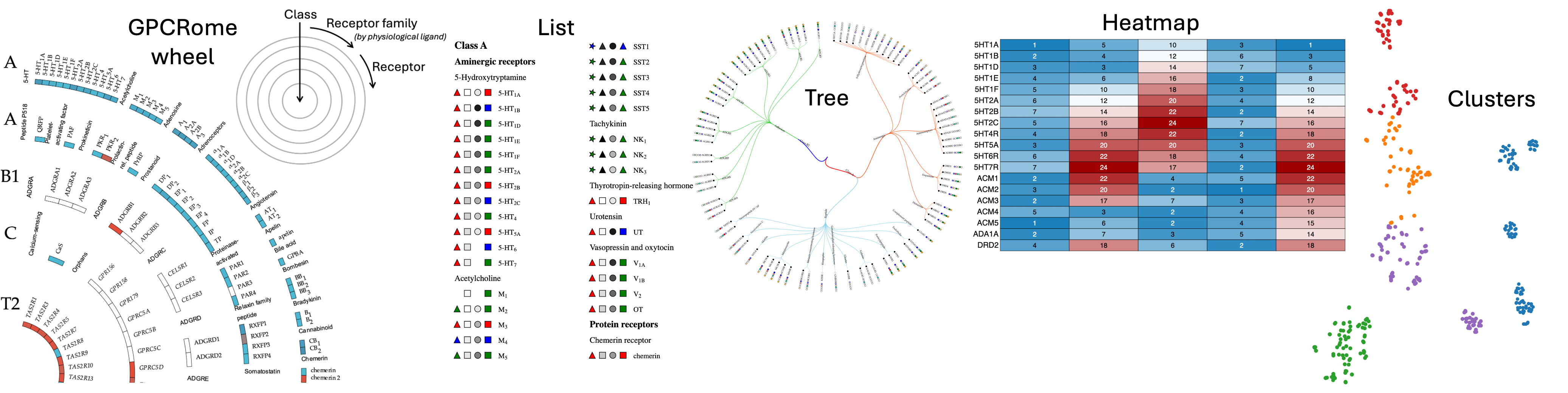
Data Mapper tool
Map your own data in interactive plots
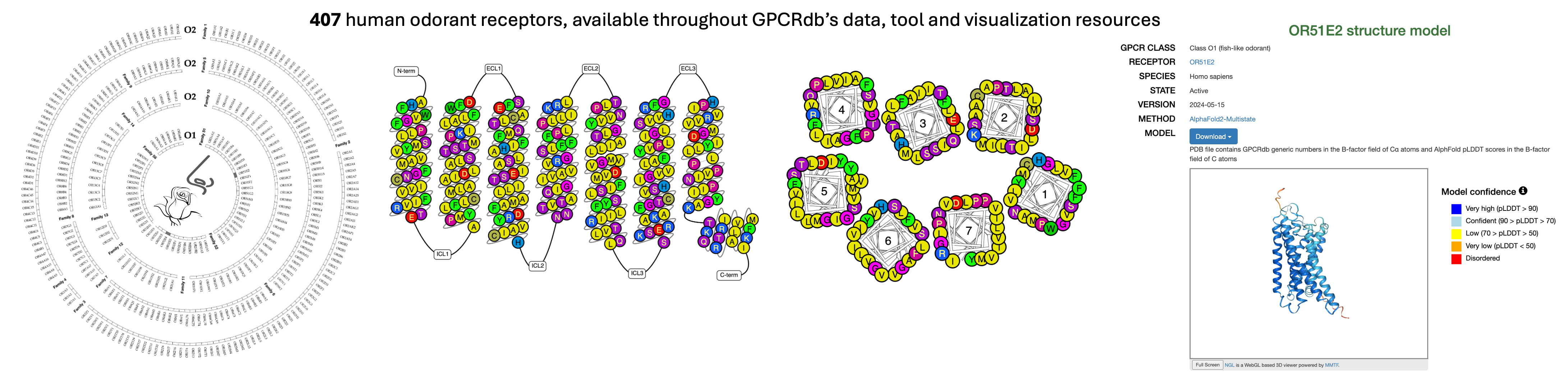
Odorant receptors
All human ORs and major model organisms
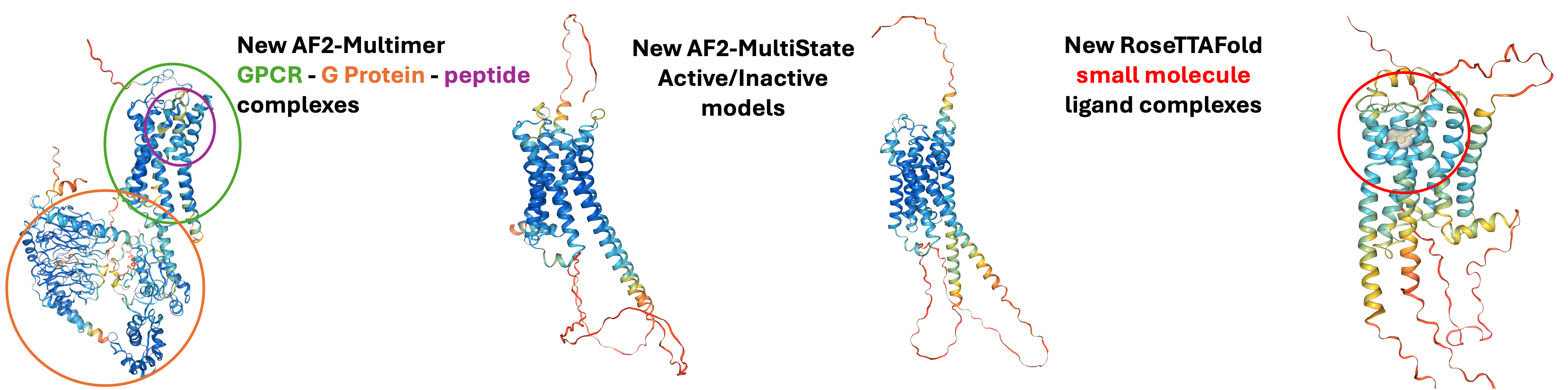
Structure models
Inactive-/active state GPCRs and physiological ligand complexes
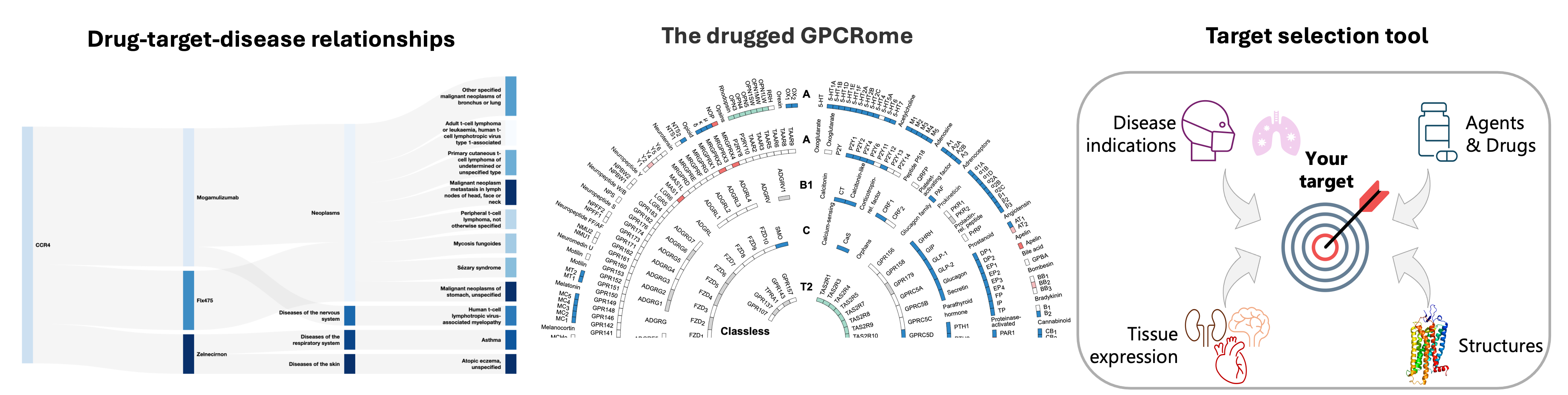
New drug resource
Agents in trial, approved drugs, target and diseases
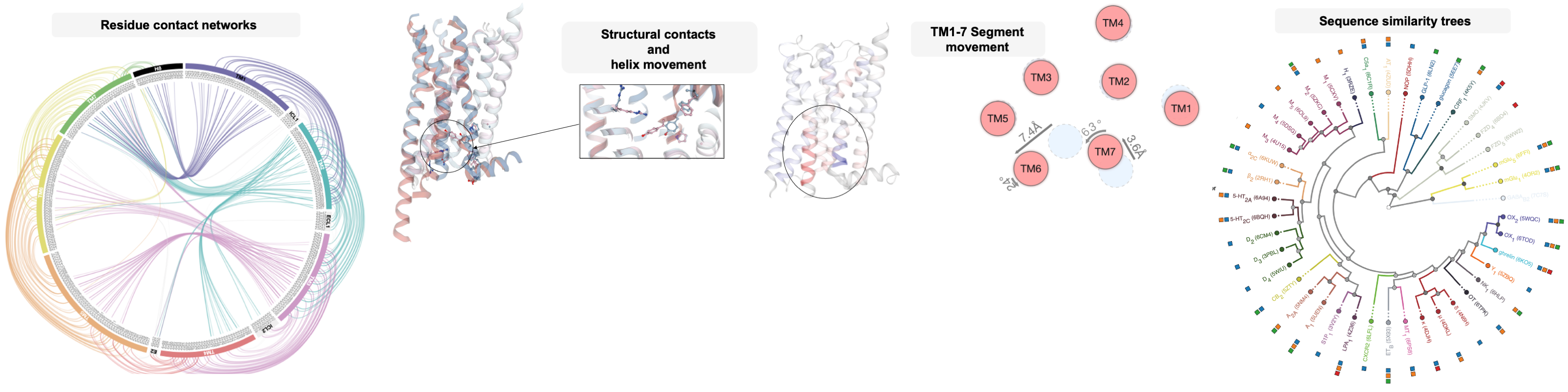
Structure analysis resource
Structure comparison tool and similarity trees.
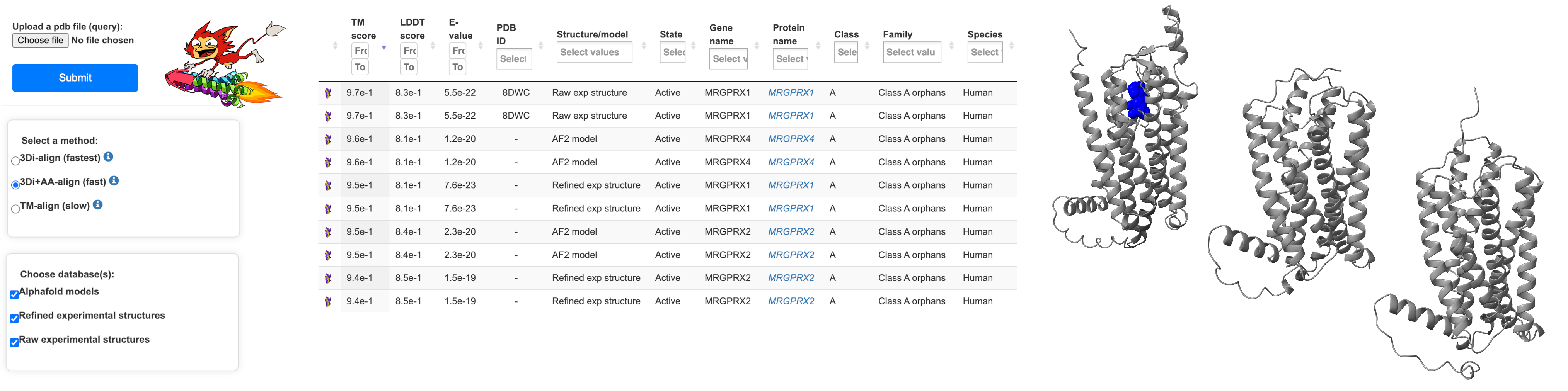
Structure similarity search
Search all of GPCRdb’s structures and models
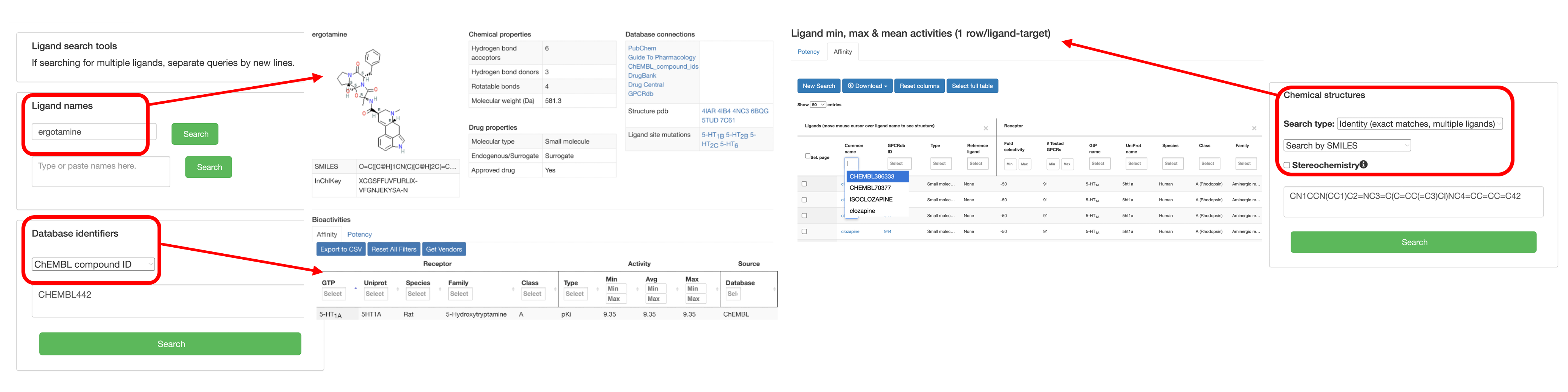
Ligand search
Find ligands by name, database identifier, similarity or substructure

GPCRdb
G protein-coupled receptors (GPCRs) are cell-surface receptors mediating the responses of 2/3rds of human hormones1 and 1/3rd of
drugs2.
Each GPCR can bind several transducers, G proteins, GPCR kinases (GRKs) and arrestins
leading to distinct intracellular signaling networks and functional outcomes.
Data
- 810 Human proteins
- 42,583 Species orthologs
- 2,577 GPCR structures
- 907 Refined structures
- 1,599 GPCR structure models
- 2,197 Ligand-GPCR structure models
- 540 Drugs
- 172 Compounds in trial
- 121 Drug targets
- 683 Disease indications
- 249,753 Ligands
- 525 Physiological ligands
- 554,897 Ligand bioactivities
- 36,002 Ligand site mutations
- 111,118 Ligand interactions
- 3,019 Generic residues
Latest release
Sept. 22, 2026- Structures page
- Adds all PDB structures released by July 15th, 2026
- Structure annotation adding auxiliary small molecules & ligand modality
- New, fast and user-friendly interface
- Structure coverage page
- New visualizations
- Structure models (ligand complexes) page
- Drug-GPCR models (from Boltz2)
- Peptide ligand-GPCR models (from AlphaFold)
- Ligands
- Ligand variants and groups
- Persistent ligand identifiers
- Peptide hormone analog bioactivities page
- New ligand bioactivities from literature
- Ligand interactions page
- New interface
- Data mapper page
- Data pasting and editing online
- Other
- Gene names with NCBI Entrez links
- Vomeronasal pheromone receptors added
- Sequence alignments page
- GPCR segment selection visual update
- Receptor page
- Snake plots, vertical helix alignment
- GPCR Classification
- Arrestin-GPCR complex models (from AlphaFold-multimer)
- Phosphorylation site resource
All releases
Publications
GPCRdb in 2025: adding odorant receptors, data mapper, structure similarity search and models of physiological ligand complexes.
Nucleic Acids Research, 2025
An online GPCR structure analysis platform.
Nature Structural & Molecular Biology, 2021
GPCR drug discovery: new agents, targets and indications.
Nature Reviews Drug Discovery, 2025
Generic GPCR residue numbers - aligning topology maps while minding the gaps.
Trends in pharmacological sciences, 2015